Lynton and Lynmouth

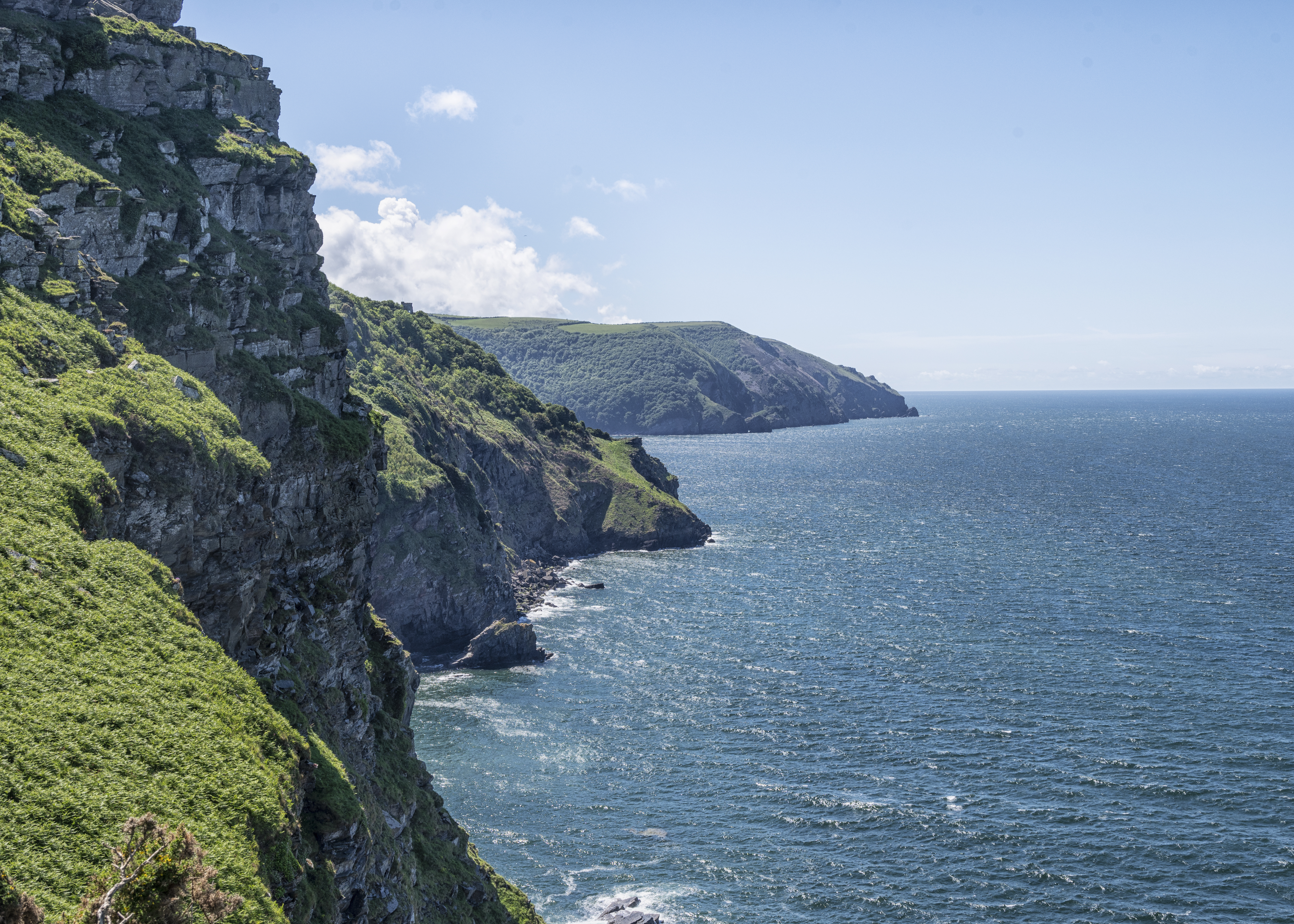
Not much more to say about this day out that hasn't already been said in previous blogs. The weather was ace, the funicular railway was working again (after being closed for the pandemic) and the scenery as stunning as ever. As I said in my first blog about Lynton and Lynmouth, the view, both up and down the coastline as you come down Countisbury Hill into Lynmouth, is possibly the most breathtaking and beautiful view I have ever seen.

Two added bonuses for the day were a nice walk through the old town of Lynton and a visit to Mother Meldrum's Tearoom in The Valley of Rocks. Mother Meldrum was a character from Lorna Doone by R D Blackmore and was reputedly a witch who lived in a cave in one of the large rock formations in the valley. Splendid food along with splendid views. The tuna mayo sandwiches went down really well.

Also it was nice to get close-up views of the many wild goats who live in the Valley of Rocks, they were quite comical both in their looks and habits and seem quite content to share their habitat with the many tourists.

We had out first daytime drinks of the holiday as well, sitting outside of The Rising Sun which is situated right next to Lynmouth Harbour, it was nice just to be able to sit and watch the world go by once again.

The Foreland from Countisbury Hill

The Foreland from Countisbury Hill

Towards Lynmouth and Lynton

The Foreland from Countisbury Hill

Sal with Lynmouth and Lynton behind

Lynmouth Harbour

Lynmouth Harbour

Lynmouth Harbour

Lynmouth Harbour

Devon Coastline

Devon Coastline

The Valley of Rocks

The Valley of Rocks

Wild Goat

Having a scratch


Monksilver, Stogumber, Treborough and Cleeve Abbey, Somerset

I always love visiting Cleeve Abbey, which is just a short drive up the road from Watchet in Somerset, possibly because we always pick a warm, sunny day to do it. The abbey was founded in the late twelfth century as a house for monks of the austere Cistercian order. Over its 350-year monastic history Cleeve was undistinguished amongst the abbeys of its order, frequently ill-governed and often financially troubled. The sole member of the community to achieve prominence was John Hooper, who became a bishop during the Reformation.

In 1536 Cleeve was closed by Henry VIII in the course of the Dissolution of the Monasteries and the abbey was converted into a country house. Subsequently, the status of the site declined and the abbey was used as farm buildings until the latter half of the nineteenth century when steps were taken to conserve the remains. 

In the twentieth century Cleeve was taken into state care; the abbey is now looked after by English Heritage and is open to the public. Today Cleeve Abbey is one of the best-preserved medieval Cistercian monastic sites in Britain. While the church is no longer standing, the conventual buildings are still roofed and habitable and contain many features of particular interest including the 'angel' roof in the refectory and the wall paintings in the painted chamber.

For more detailed information see wiki/Cleeve_Abbey

Prior to going to The Abbey, Sal and I went to look at two nearby villages, one of which I found a few days earlier: Monksilver and the other Strogumber, which I had read about on the internet. 

Monksilver was just the epitome an English Village, looking absolutely beautiful with all the summer garden flowers just about to come in to full bloom and with many of the cottages still having their thatched roofs. 

 Strogumber looked just the same albeit somewhat larger. Also the locals here had decorated the outside of their church with knitted flowers for the Queen's Jubilee and were also in the process of decorating the interior.  I have posted photos of both villages.

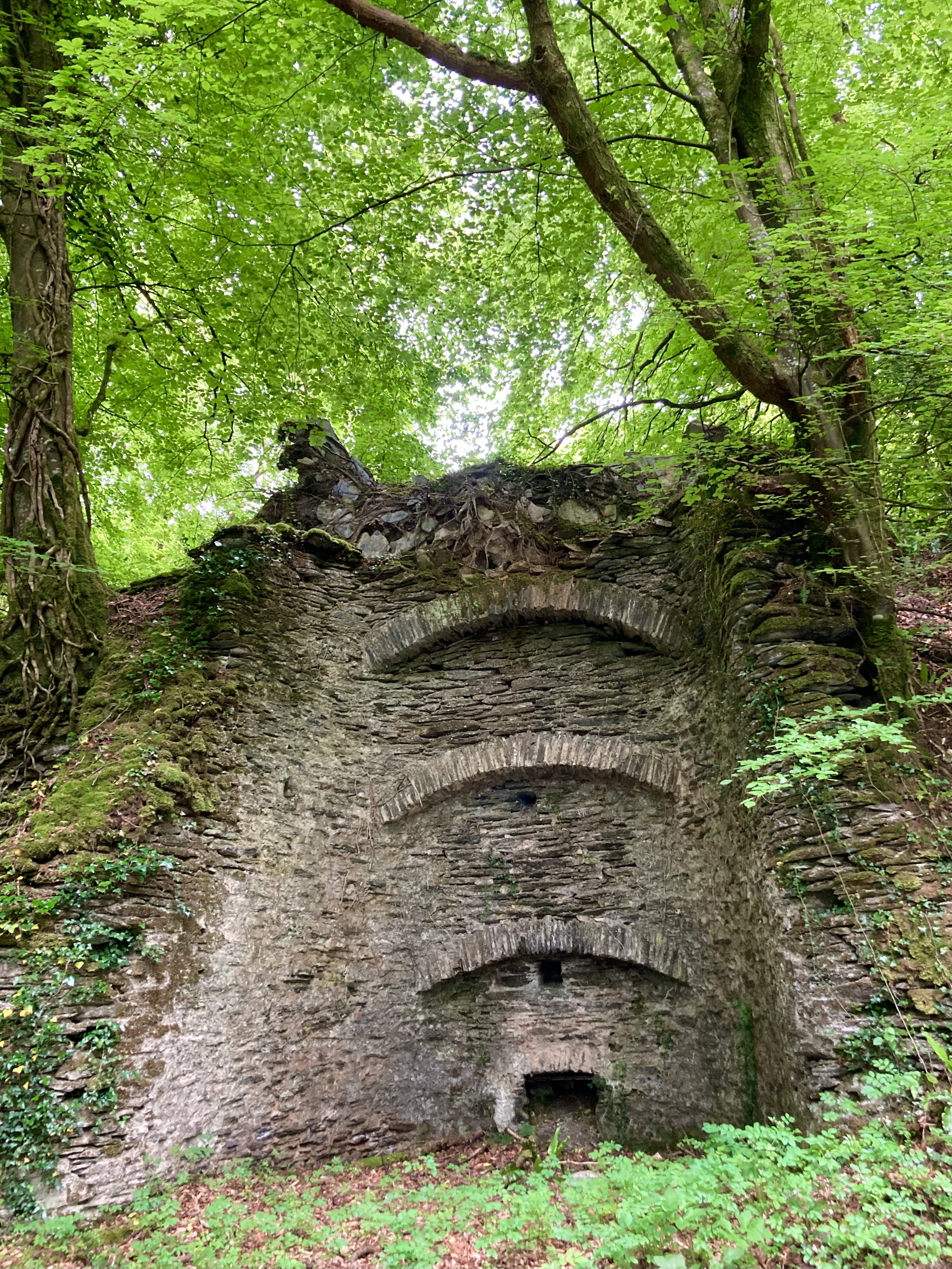
On our way back to Cleeve, I took Sal to see some impressive old limestone kilns in Treborough Plantation near Roadwater which I came across on a previous visit. We had tried to find them a few days earlier but had turned back as I though we had taken the wrong road. As it turned out, we were on the right road and if we'd have carried on another half mile we would have come across them. I have not been able to find any history about them but have included photos of them as well.

All in all a very interesting and rewarding day.


Original floor tiles , Cleeve Abbey

Cleeve Abbey

Cleeve Abbey

Cleeve Abbey

Cleeve Abbey

Cleeve Abbey

Cleeve Abbey

Cleeve Abbey

Cleeve Abbey

Monksilver

Monksilver

Monksilver

Stogumber

Stogumber

Stogumber

Stogumber

Malt kilns at Treborough

Malt kilns at Treborough


Malt kilns at Treborough


Treborough Plantation


Malmsmead and The Doone valley

What a cracking day this turned out to be. I had been to this area before but, once down in The Brendon Valley, I had headed westwards to Rockford and Watersmeet instead of eastwards  into The Doone Valley named after R.D. Blackmore's novel Lorna Doone. 

The road leading down to Malmsmead, which sits at the start of the valley, was reached by the narrowest of roads with only a few passing place. The road followed Oare Water which for most of the way meandered through ancient woodlands which looked beautiful in the morning sun.

You either ford the river or cross the narrowest of packhorse bridges to arrive in Malmsmead; I chose the bridge but I wouldn't fancy doing that in a bigger car. The parking is National Trust and the warden told us the way in to the valley was up an enclosed country lane which was rather tiresome before dropping back down to the valley on another enclosed path to a farm. On our descent to the farm I noticed below there were people following the river back to the start so, once down, I investigated and there was a toll path following the river for a cost of 50p. Guess which route we took back? 

You would expect the valley running through the Doone Valley to be called the River Doone but the valley name is totally made up. The river is called Badgworthy Water and begins life high up on Exmoor and then joins Oare water and flows in to The Bristol Chanel at Lynmouth. I have no idea how it got its name.

Due to my lack of energy and mobility, we just followed the river for a while and then retraced out steps back to the farm. Instead of following the farm track and road, we paid our 50p and strolled alongside the river back to Malmsmead. This proved to be a sound decision and this section proved to be the most beautiful part of our short walk.

Once back we hit The Buttery Cafe for coffee and a treat. Sitting out in the afternoon sun, in such beautiful surroundings was the perfect way to end our little adventure.


Exmoor

 Hawkecombe Wood Nature Reserve.

Hawkecombe Wood Nature Reserve.

Hawkecombe Wood Nature Reserve.

Hawkecombe Wood Nature Reserve.

Hawkecombe Wood Nature Reserve.

Doone Valley, Malmsmeade

Doone Valley, Malmsmeade

Badgworthy Water, Doone Valley

Badgworthy Water, Doone Valley

Badgworthy Water, Doone Valley

Badgworthy Water, Doone Valley

Badgworthy Water, Doone Valley

Badgworthy Water, Doone Valley

Badgworthy Water, Doone Valley

Badgworthy Water, Doone Valley

Badgworthy Water, Doone Valley

Doone Valley, Malmsmeade


Tarn Hows

Tarn Hows, which is a man made lake, was developed from three smaller tarns - which were known as High Tarn, Low Tarn and Middle Tarn. The s...