Another blog from my recent holiday with Sal. The forecast wasn't too good so we didn't fancy travelling very far. Greystoke is only a couple of miles down the road and has a lovely looking cafe for the post walk nibbles, so it fit the bill perfectly. There are no public footpaths around the estate but there are permitted footpaths which the owners and the local council have made easy to follow by numbering each noticeable feature. To go with that, there is also an online map with comprehensive detail so it is more or less impossible to get lost.
However not long in to the walk we did go slightly astray for which I blame my guide but we did realise it pretty quickly. The walk itself is about eight miles if you do the full circuit but the drizzle started and was blowing directly in to our faces so we decided to cut it short at the point where we reached open moorland which, if truth be known was only a couple of miles in to the walk.
Just before we did our about turn we passed a woodland full of pheasants (which the estate uses to shoot for so-called pleasure). We startled them and they startled us as well. About fifty of them flew from their cover and amusingly started running up a track to get away from us. It reminded me of a scene from a Benny Hill show, all that was missing was the music! I'm sorry but I just can't understand what pleasure anyone would get out
of shooting a live animal just for the fun of it. People who do that really appall me and, as far as I'm concerned, it can't be justified in any way shape or form.
The return walk wasn't too bad as the wind was now behind us and the drizzle finally eased off as we approached the Castle. Its a shame you can't visit the Castle's grounds because, looking on the Internet, there appears to be some nice gardens and lakes surrounding it but it is a private dwelling though. I suppose people are entitled to have their privacy and a least they have allowed and maintained permitted footpaths for the general public to use.
We ended our afternoon with a coffee and a piece of cake each at the C2C Cycle Cafe on the edge of the village.The Cycle Cafe consists of a pretty walled Tea Garden with gazebos, along with a rustic barn for shelter if the weather is inclement. During quiet periods only the barn is open and this is operated purely on a self service basis with drinks and cakes to hand. I suppose they rely on the honesty of their customers for payment and let's face it, you would have to be a pretty mean spirited individual not to pay. It is another cafe which is run by local people and their baking is divine. Sal had a piece of tiffin and I had one of the scrummiest slices of lemon drizzle cakes that I've ever had. The baking is definitely up to what I would call "Women's Institute standard" which, in my book, is bloody good!
This is another walk for us to do on a fine day: a day when we can take our time and do the complete 8 mile circuit.
To end the blog, here is a brief history of the castle -
- In 1069, Llyulph de Greystoke, after whom Ullswater is named, was re-granted his lands by the Normans, following their successful conquest. The wooden tower he had built at Greystoke, which was surrounded by a high fence or pale (pele), was replaced with a stone-built tower.
- In 1346, King Edward III gave permission for the building to be castellated and the castle proper was created.
- Thomas Howard, Duke of Norfolk and Earl Marshal of England, sent north in the early 1520s to solve the Scottish problem, met and subsequently married Lady Anne Dacre. She had inherited the castle and lands on the death of her husband and her marriage gained for the Howard family a considerable part of what was the county of Cumberland.
- The castle became one of the border chain of fortifications which replaced Hadrian’s Wall as a barrier against the Scots.
- The castle was held for the King during the civil war and after the war, in 1660, was destroyed by Cromwell as a result. The castle was later rebuilt and enlarged into a modern farm.
- In 1868, a maid left a lighted candle in a cupboard full of linen and the consequent fire destroyed large parts of the castle. It was rebuilt by Henry Howard.
- The estate was commandeered by the army in 1939 and the land became a tank-drivers’ training ground. The castle itself later became a prisoner of war camp, largely for Poles who had been fighting for the Germans, the prisoners providing labour to run local farms whose men-folk were away fighting.
- Post-war, the long process of restoration and modernisation was initiated which has continued ever since. Fourteen generations of the Howard family have lived in the castle thus far.
 |
| Exercising the local racehorses |
 |
| Greystoke Village Cross |
 |
| Sal at the Castle Entrance |
 |
| Main Castle Driveway |
 |
| Greystoke Castle |
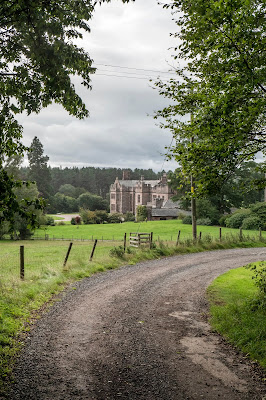 |
| Greystoke Castle |
 |
| Home Farm |
 |
| Tractor Collection |
 |
| Castle Pond |
 |
| Dutch Barn |
 |
| Dutch Barn |
 |
| Disturbing the local game |
 |
| Home Farm |
 |
| A wet Home Farm |
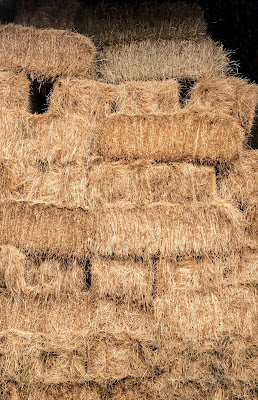 |
| Straw in barn |
 |
| Home Farm |
 |
| Pele Tower, Greystoke Castle |
 |
| Castle Grounds |
 |
| Driveway up to the Castle |
 |
| Beware, Red Sqirrels |
 |
| Castle and Pele Tower |
 |
| Old Castle Entrance |


